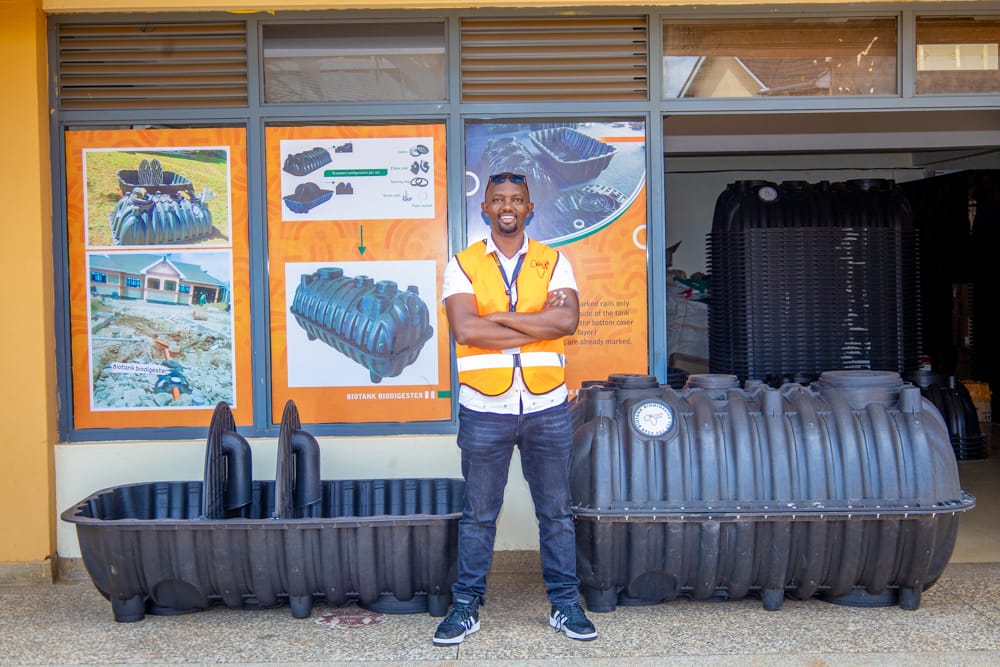
A biodigester is one of the easiest sanitation systems to own in Kenya. There are no monthly exhauster bills. There is no pit that fills up every few months. But easy does not mean zero care.
Biodigester maintenance comes down to one thing. Keep the bacteria inside the tank alive and healthy. Do that, and your system will work quietly for years. Ignore it, and you will deal with smells, slow flushing and repair costs you could have avoided.
Biodigester Maintenance in Kenya: How to Keep Your System Working for Years
To maintain a biodigester, flush only human waste and toilet paper. Keep pads, diapers, condoms, plastic and cooking oil out of the toilet. Use mild cleaners that are safe for biodigesters. Add a bacteria and enzyme treatment like BioClean Septic regularly. Clean your grease trap twice a year. A well maintained biodigester rarely needs desludging.
Why maintenance matters: the bacteria do the work
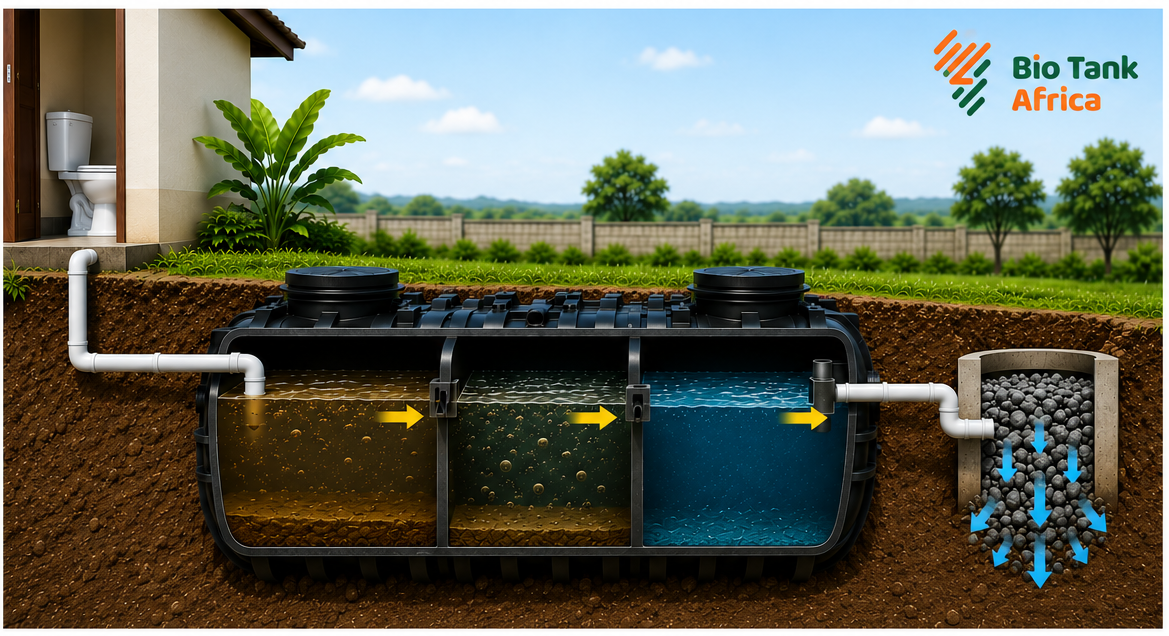
A biodigester is a sealed tank where natural bacteria break down human waste. The bacteria work without oxygen. They turn solid waste into treated water and a small amount of sludge. The treated water then flows into a soak pit and drains safely into the ground.
So every habit in this guide has one goal: protect the bacteria. Anything that kills them, starves them or blocks the system will cause problems.
You can also read: How Does a Biodigester Septic Tank Work?
What your biodigester is built to handle
Your biodigester is built for toilet waste:
- Human waste
- Toilet paper
- Water from flushing
Kitchen water is different. It carries oil, grease and food bits. It should pass through a grease trap and go to its own kitchen soak pit, not into the biodigester.
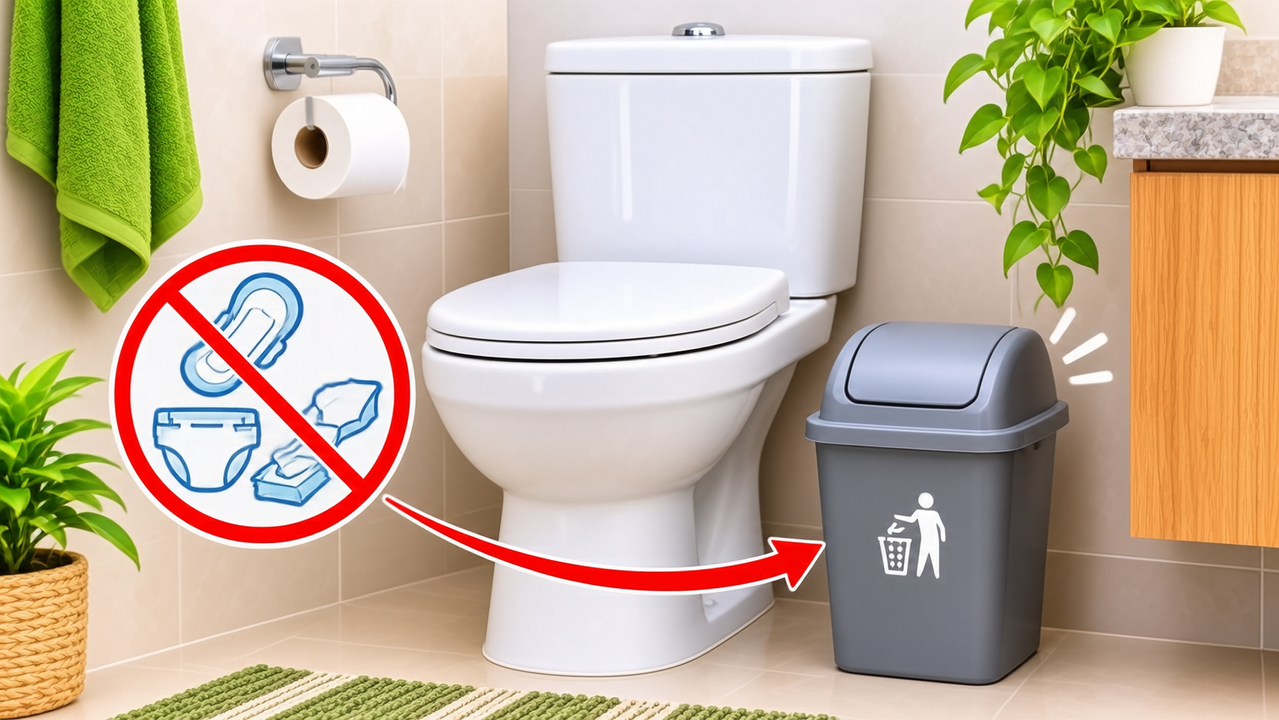
A simple rule for the whole household: if it did not come out of your body and it is not toilet paper, it does not go in the toilet.
What you should never flush
Most biodigester problems in Kenya start with what goes into the tank. Keep these out:
- Diapers and sanitary pads. They do not break down. They are the most common cause of blockages.
- Condoms. They are made of latex or plastic and will not break down.
- Plastic bags and wrappers. Plastic never breaks down inside the tank.
- Wet wipes, even the ones labelled flushable. They stay whole long after toilet paper has dissolved.
- Hard items like cotton buds, bottle tops and toys.
- Cooking oil and grease. They harden inside pipes and starve the bacteria.
- Strong chemicals, paint and petrol. These kill the bacteria.
- Old medicines. Many medicines can harm the good bacteria.
The US Environmental Protection Agency gives the same advice for septic systems.
Keep a small bin with a lid in every bathroom. It is the cheapest maintenance tool you will ever buy.
Choose cleaners that are safe for your biodigester
You do not need to stop cleaning your toilet. You just need the right cleaner.
Strong bleach and harsh chemicals used in large amounts can kill the bacteria in your tank. A small splash is fine. Pouring half a bottle of detergent down the toilet every day is not.
Use cleaners made for biodigester homes. Tazo Toilet Cleaner is safe for biodigesters. It cleans your toilet without killing the bacteria that keep your system working.
For the kitchen, use Tazo Kitchen Drain Cleaner. It keeps kitchen pipes clear. Kitchen water flows to the kitchen soak pit, not the biodigester.
Add bacteria and enzymes regularly
Even a healthy system benefits from a regular boost of good bacteria. This matters most:
- When the system is new
- After heavy use of strong cleaners or medicines in the home
- After the house has been empty for some time, such as after travel or between tenants
- When you notice a smell or slow drainage
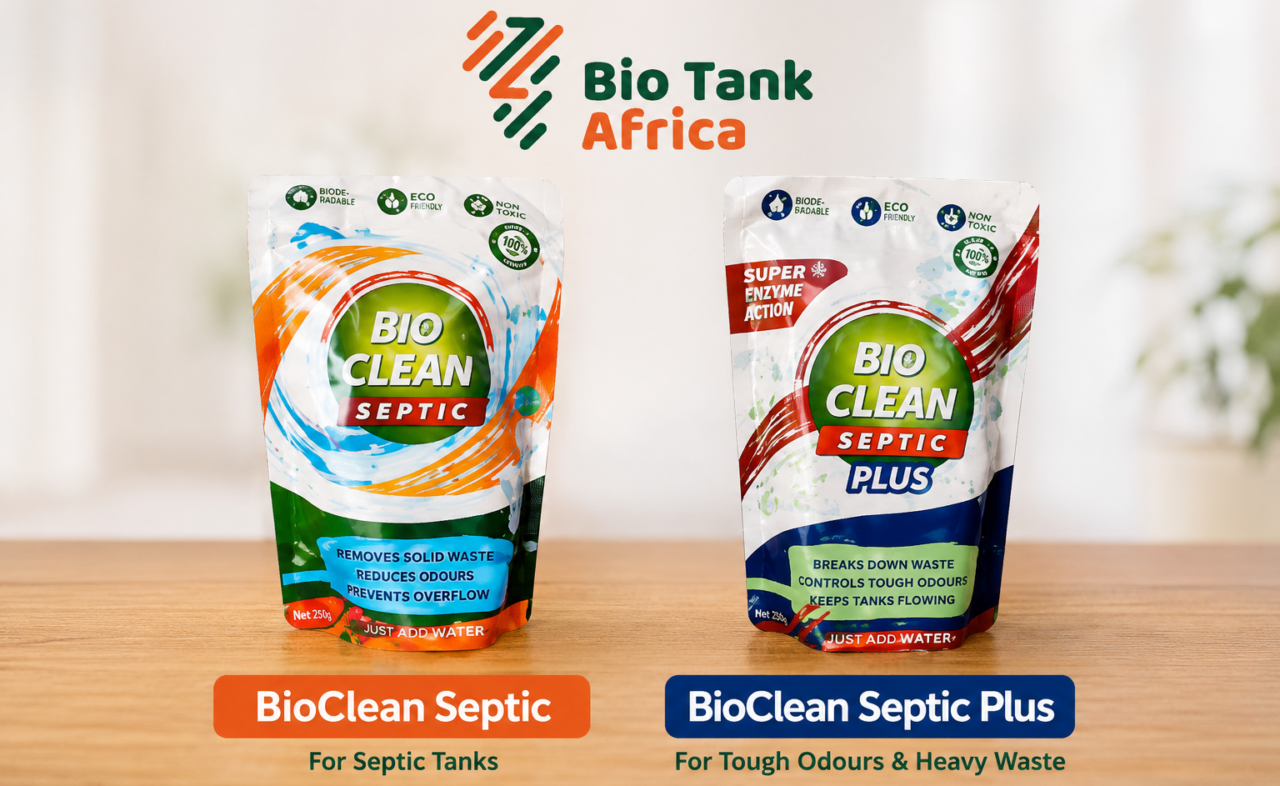
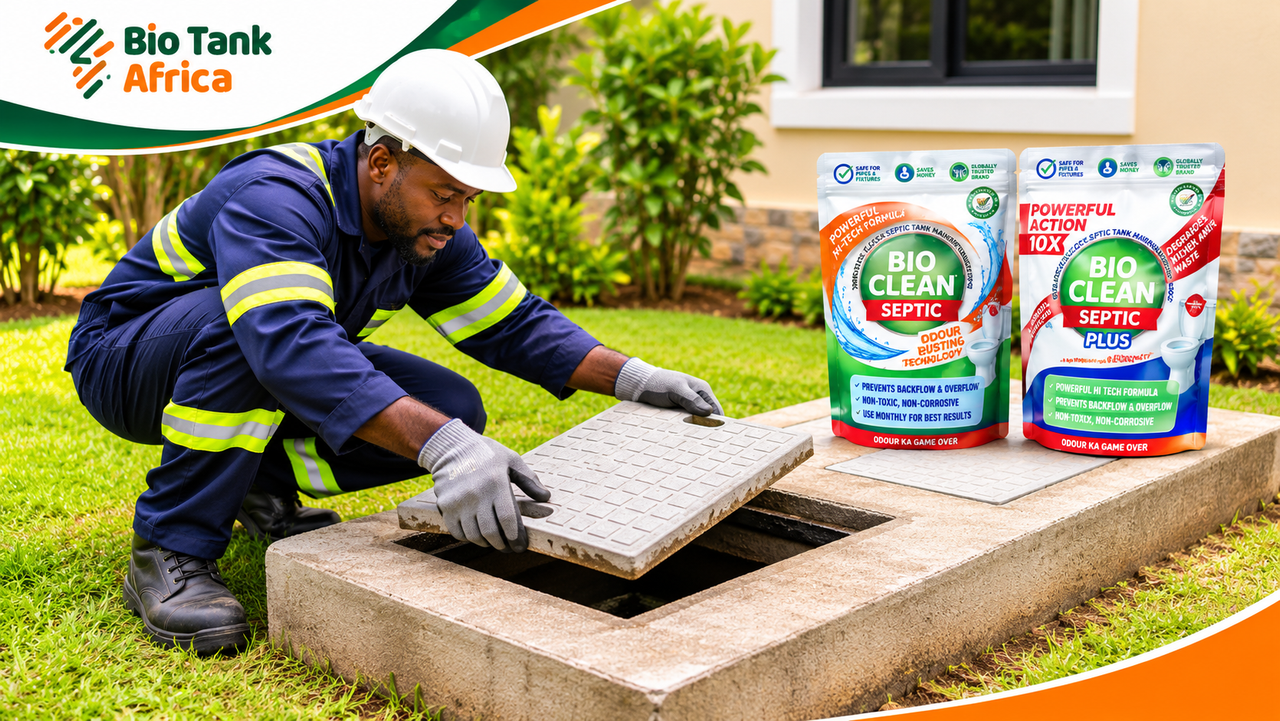
BioClean Septic and BioClean Septic Plus add good bacteria and enzymes to your tank. Simply flush the dose shown on the pack and repeat as the pack directs. Not sure which one fits your home? Call the Biotank team and we will advise you.
You can also read: Bio Enzymes in Kenya: Benefits, Price and How They Work
Look after the soak pit
The soak pit is where treated water from your biodigester goes. It releases small amounts of water deep into the ground, where the soil absorbs it slowly. A well built soak pit should last as long as your biodigester. A few simple habits keep it that way:
- Keep rainwater out. Gutters and runoff should never drain into the soak pit. Too much water floods it.
- Do not build or park on it. Keep cars, lorries and building materials away.
- Keep trees away. Roots look for water and can block or damage pipes. Grass is fine.
- Keep the cover easy to reach. Do not pave over it. You will need access for checks.
- Keep solids out of the system. The soak pit is built for treated water only. Pads, diapers and plastic that get past the tank can block it.
- Watch for pooling water. Water on the surface means something is wrong. Call a fundi to check it early.
Clean your grease trap twice a year
A grease trap catches oil and food bits before they block your kitchen drains. It only works if you empty it.
Clean your grease trap at least twice a year. Busy kitchens in restaurants, hotels and schools may need it more often. A simple rule is to clean it before it gets a quarter full of grease.
See our Grease Trap Pro range for homes and commercial kitchens.
A simple maintenance routine
| How often | What to do |
|---|---|
| Every day | Use the bathroom bin. Keep oil out of the sink. |
| Every month | Add BioClean as shown on the pack. Check that the ground over the soak pit is dry. |
| Every 6 months | Clean the grease trap. Open the inspection chamber and check that water flows freely. |
| Every year | Ask a fundi to check the pipes, inspection chambers and soak pit. |
Warning signs to act on early
Most problems are easy to fix when you catch them early. Call a fundi or Biotank if you notice:
- A bad smell around the toilet, tank or soak pit. A healthy biodigester should not smell.
- Slow flushing or gurgling drains. This usually means a partial blockage.
- Water pooling or very green grass over the soak pit.
- Water backing up into the shower or floor drain. Stop using the system and get it checked right away.
Often, clearing the blockage and adding a dose of BioClean brings the system back to normal within days.
You can also read: Disadvantages of a Biodigester Septic Tank and How to Avoid Them
Tips for landlords, schools and businesses
More users means more risk. You also have less control over what people flush. These steps help:
- Put a clear sign in every bathroom: “Please do not flush pads, diapers, wipes or plastic. Use the bin.”
- Provide bins with lids and empty them often.
- Add BioClean more often than a single family home would.
- Fit a grease trap on every kitchen line.
- Choose a biodigester sized for the real number of users, not the minimum.
You can also read: Septic Tank vs Biodigester in Kenya: Which Is Better?
Why a well maintained Biotank is good value
A Biotank biodigester has a lifespan of more than 50 years. Look after it, and it rarely needs desludging. That means fewer exhauster bills, fewer repairs and more value for your money over the life of your home.
You can also read: Biodigester Cost in Kenya
Frequently asked questions
How often does a biodigester need desludging?
A well maintained biodigester rarely needs desludging. The bacteria break down most of the solid waste. Keeping the wrong items out and adding BioClean regularly keeps sludge low.
Can I use harsh detergents with a biodigester?
Small amounts are fine. Avoid pouring large amounts down the toilet. For daily cleaning, use a biodigester safe cleaner like Tazo Toilet Cleaner.
Why does my biodigester smell?
The most common causes are strong chemicals killing the bacteria, a blocked vent pipe, or a blockage between the house and the tank. Adding BioClean and checking the vent solves most cases.
Can kitchen water go into a biodigester?
No. Kitchen water should pass through a grease trap and go to its own kitchen soak pit.
How often should I clean my grease trap?
At least twice a year for most homes. Busy commercial kitchens may need it more often.
How long does a soak pit last?
A well built soak pit should last as long as your biodigester. Keep rainwater and solids out of it.
How long does a biodigester last?
A Biotank biodigester has a lifespan of more than 50 years when it is well maintained.
Who can service my biodigester?
Any trained fundi can do routine checks. Biotank units are simple to inspect, so you are not tied to one installer.
Keep your biodigester working for years
Biodigester maintenance is simple. Keep the wrong things out. Use safe cleaners. Add good bacteria regularly. Clean your grease trap twice a year. Act early when something seems wrong.
Need BioClean, Tazo cleaners or a new Biotank biodigester?
Call or WhatsApp Biotank Africa on 0709 006 300 to order today.
You can also shop online at biotankbiodigester.com/shop.