
As the world marks World Cities Day under the theme “Regenerating the City: Adequate Housing for All,” the conversation must extend beyond housing to the sanitation systems that make cities healthy, safe and sustainable.
By Edwin Kirugo
Recently, I found myself looking at how Nairobi has changed over the decades. It made me think about the city my children are growing up in, and the one my grandchildren might one day call home.
At independence in 1963, Nairobi had roughly 343,000 people. By 1979, the population had grown to about 828,000. The 2019 census counted about 4.4 million, and the figure is closer to 6 million today, not counting satellite towns.
Each generation has had its own Nairobi: our parents’ 1980s city of River Road music shops, then the dot-com years and the construction boom. Today, homes and businesses stretch towards Kiambu, Thika, Machakos and Kajiado, and a journey out of town can feel like a commute within one vast metropolitan region.
So I keep asking a question that goes beyond roads, buildings and traffic: are we building the sanitation systems to match the city we are becoming?
By 2050, roughly half of Kenya’s population will live in urban areas (we are talking of half of 95-97 million according to predictions). Yet in 2024/25, only 16 per cent of people in areas served by regulated water service providers had access to sewerage.
On 31 October, the world marks World Cities Day under the theme “Regenerating the City: Adequate Housing for All.” In Kenya, that conversation must include sanitation. A home is not adequate if there is no safe, reliable way to manage its wastewater.
A house is not complete when construction ends
When we talk about adequate housing, we focus on what we can see: how many houses are built, what they cost, and whether there are roads, electricity and water. But what happens after water is used in the kitchen, bathroom or toilet matters just as much.
Too often, sanitation is the last item on the construction checklist. A homeowner thinks about it when the house is nearly done, a developer sees another cost, and a growing town keeps approving developments without planning for their wastewater. Yet wastewater does not disappear once construction ends. Poor planning means risks to public health and the environment, extra costs for households, and more pressure on county services.
The economic cost tells the story. A 2012 World Bank study estimated that inadequate sanitation cost Kenya KSh27 billion annually, about 0.9 per cent of GDP at the time. The figure is dated, but the point stands: poor sanitation has a price, even when it is missing from the construction budget. It belongs in the plan from the beginning.
Different towns need different solutions
Kenya needs continued investment in centralised sewerage, especially in dense urban areas, with networks maintained, expanded where feasible, and wastewater treated safely.
But sewers are not available everywhere, and extending them takes time and money. In many growing towns, properly designed decentralised and on-site systems are an important alternative. The choice is not simply between a sewer and a biodigester. It is about what works for a particular site: density, soil, the scale of the development, regulations and the ability to maintain the system. What suits a standalone home may not suit an apartment complex.
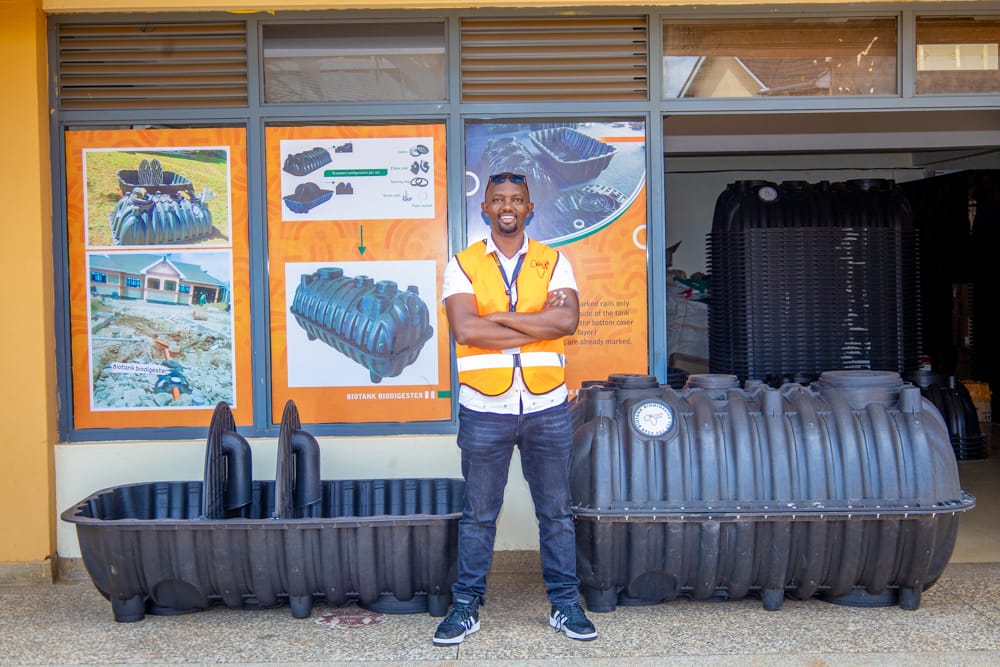
At BioTank Africa, our work on decentralised biodigesters has shown us the need for practical options where there is no sewer. They can play a role, but they are not a universal answer.
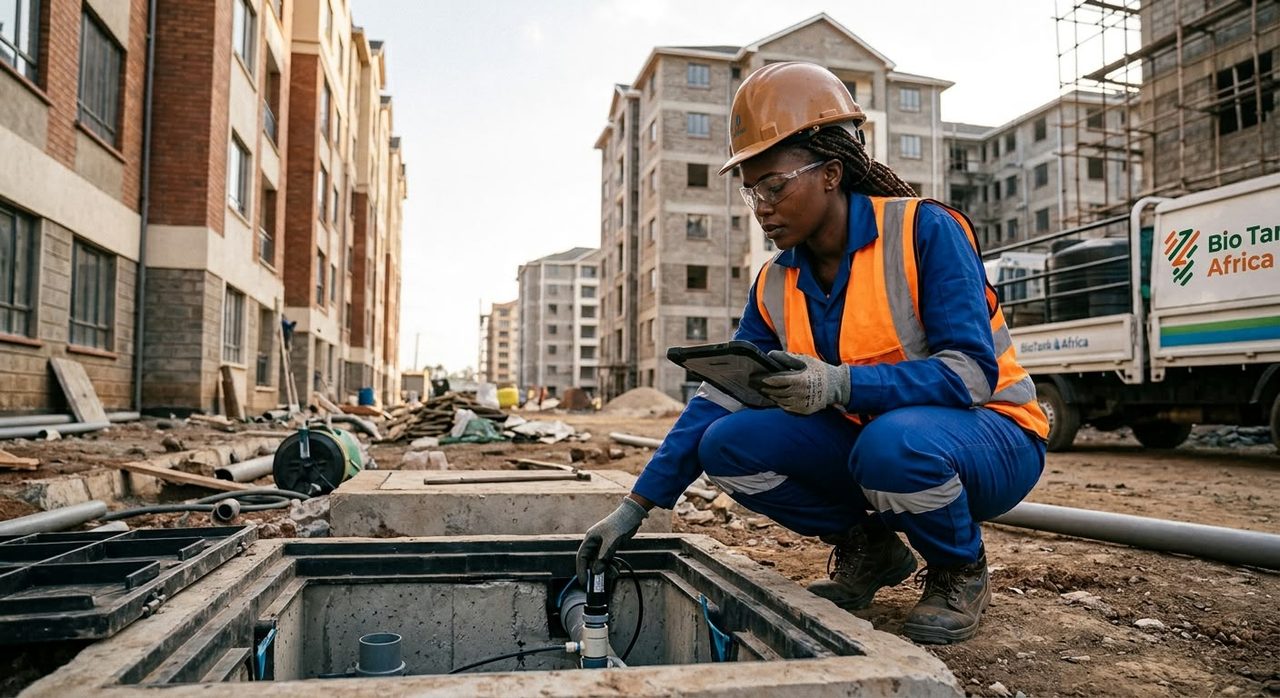
We must also recognise the people who make these systems work. Plumbers, fundis, contractors, installers and distributors are part of the sanitation infrastructure.
Sanitation must be part of urban planning
So, what needs to change?
First, county governments should give wastewater the same attention as roads and water supply when planning neighbourhoods and approving developments, and do it early, not once construction is under way.
Second, developers and homeowners should ask the right questions before building. Is a sewer connection available? If not, what suits the site? How will it be maintained? Where does the wastewater go after treatment? The answers affect the safety, value and liveability of a property.
Third, the public and private sectors must work together. Government plans infrastructure and enforces standards, utilities maintain services, and the private sector brings technologies and skilled installers. Together, they need to decide where sewer networks are needed and where decentralised systems fit.
Urban growth is not the problem. Growing towns bring jobs, investment, housing and better services. The challenge is making sure the infrastructure beneath that growth keeps pace.
The towns our children inherit will be shaped by the decisions we make today. We may not know what they will look like in 30 or 50 years, but we can decide that sanitation is part of their future from the start.
The writer is the General Manager, BioTank Africa