You’re building or renovating your home in Nairobi. The structure is coming together nicely, foundation done, walls up, roof almost on. Then your contractor asks: “What are we doing for sewage?”
Most Kenyan homeowners default to what they know: a septic tank. It’s what their parents used. It’s what the neighbour has. It feels familiar and safe.
But here’s something worth knowing before you make that call. The biodigester, specifically a plastic, ready-made biodigester, is quietly becoming the preferred choice for thousands of homeowners across Kenya.
And once you understand how it works and what it costs, it’s not hard to see why.
This guide covers everything you need to know about a biodigester in Kenya: what it is, how it works, what it costs, how it compares to a septic tank, and how to get one installed. By the end, you’ll have all the information you need to make an informed decision.
What Is A Biodigester? (And Why Is Everyone Talking About It?)
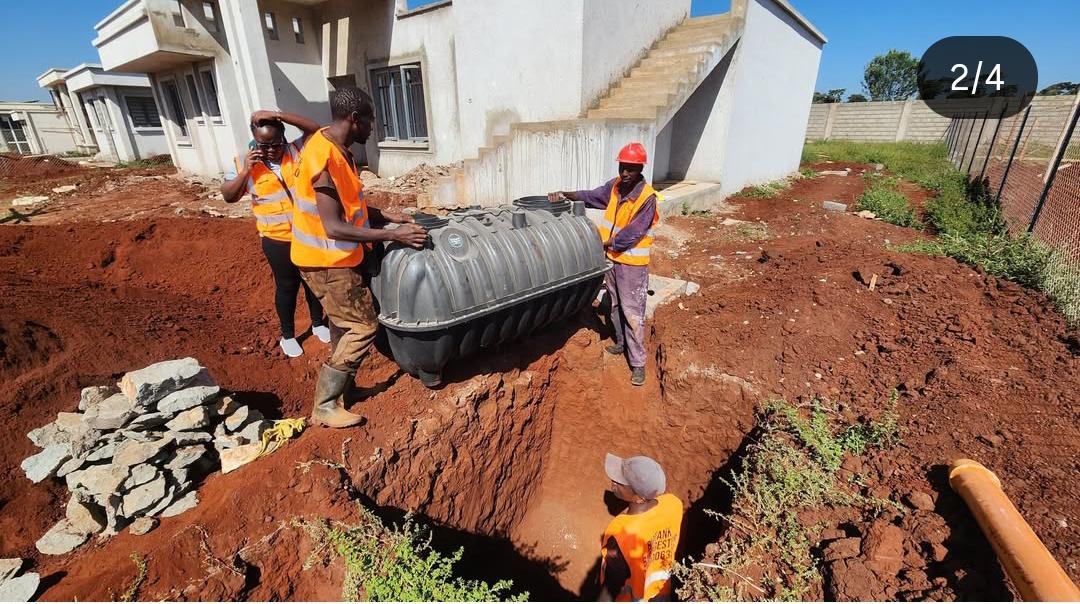
A biodigester is an enclosed system that breaks down human waste using naturally occurring microorganisms. Instead of storing waste and waiting for an exhaustion truck to clear it out every few months, a biodigester digests the waste biologically, continuously, quietly, and without any foul smell.
Think of a biodigester as a self-cleaning sewage system. Once installed and activated with bioenzymes, it handles your household waste on its own, day after day, with very little input from you.
In Kenya, two main types of biodigesters exist:
- The traditional concrete biodigester (built on-site by masons)
- The modern plastic biodigester (factory-made, ready to install)
For most homeowners today, the plastic biodigester is the smarter choice, and we’ll explain exactly why as we go.
The Difference Between A Biodigester And A Septic Tank
Many people use the terms biodigester and septic tank interchangeably, but they are not the same thing.
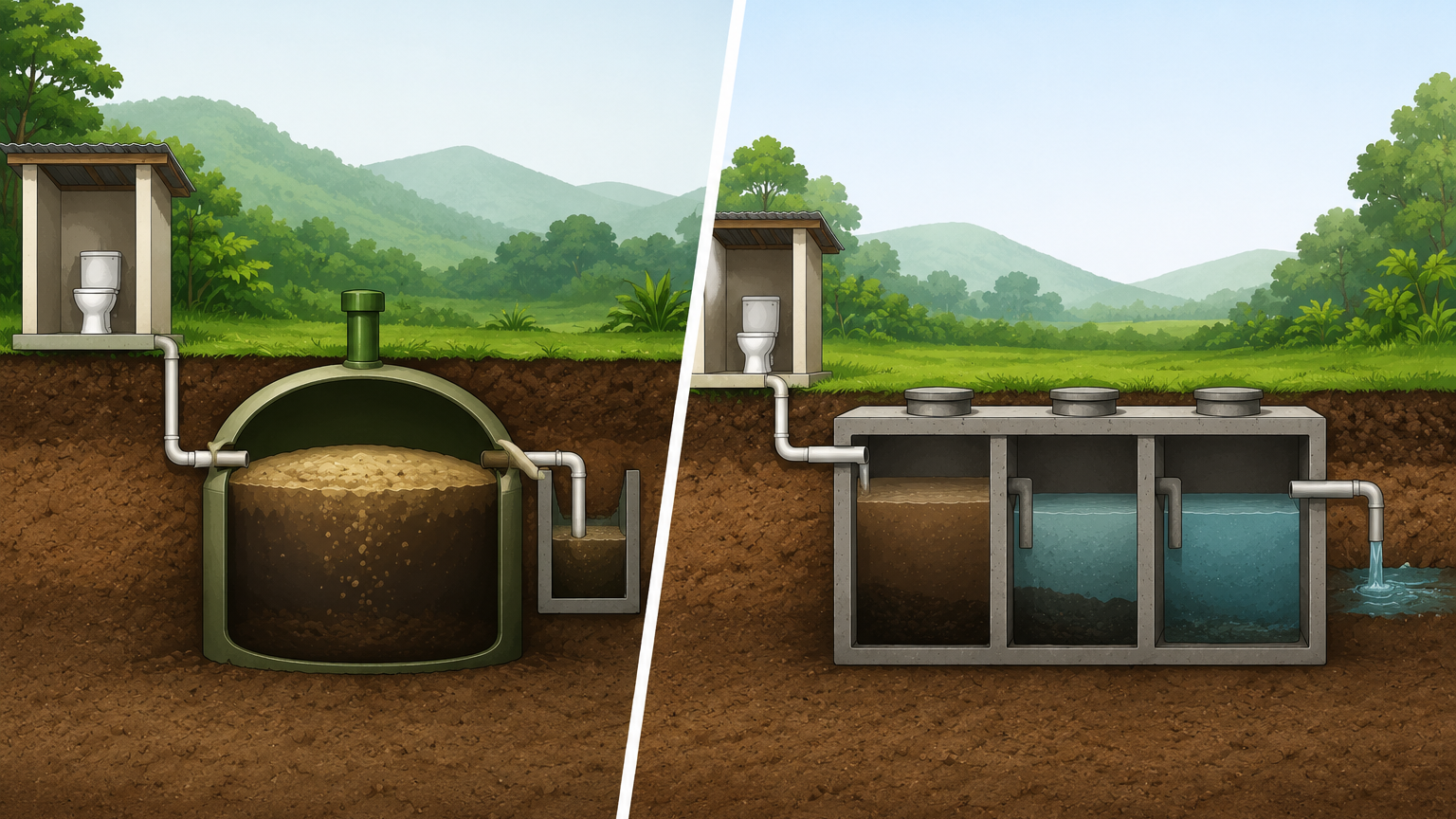
A septic tank collects and partially separates waste. Solids sink to the bottom, liquids flow out. But the solids accumulate, and every few months, you pay a tanker to come and pump out the sludge. That cost adds up fast, and if you’ve ever been around when the exhaustion truck arrives, you know the smell is something you don’t forget.
A biodigester, on the other hand, doesn’t just store waste; it digests it. Bacteria and enzymes break the waste down into water and gas. Unlike a septic tank, there’s little to no sludge accumulation, so no exhaustion truck is needed (saving you significant money over time). And there’s no foul smell, simply a system doing its job quietly underground.
How Does A Biodigester Work?
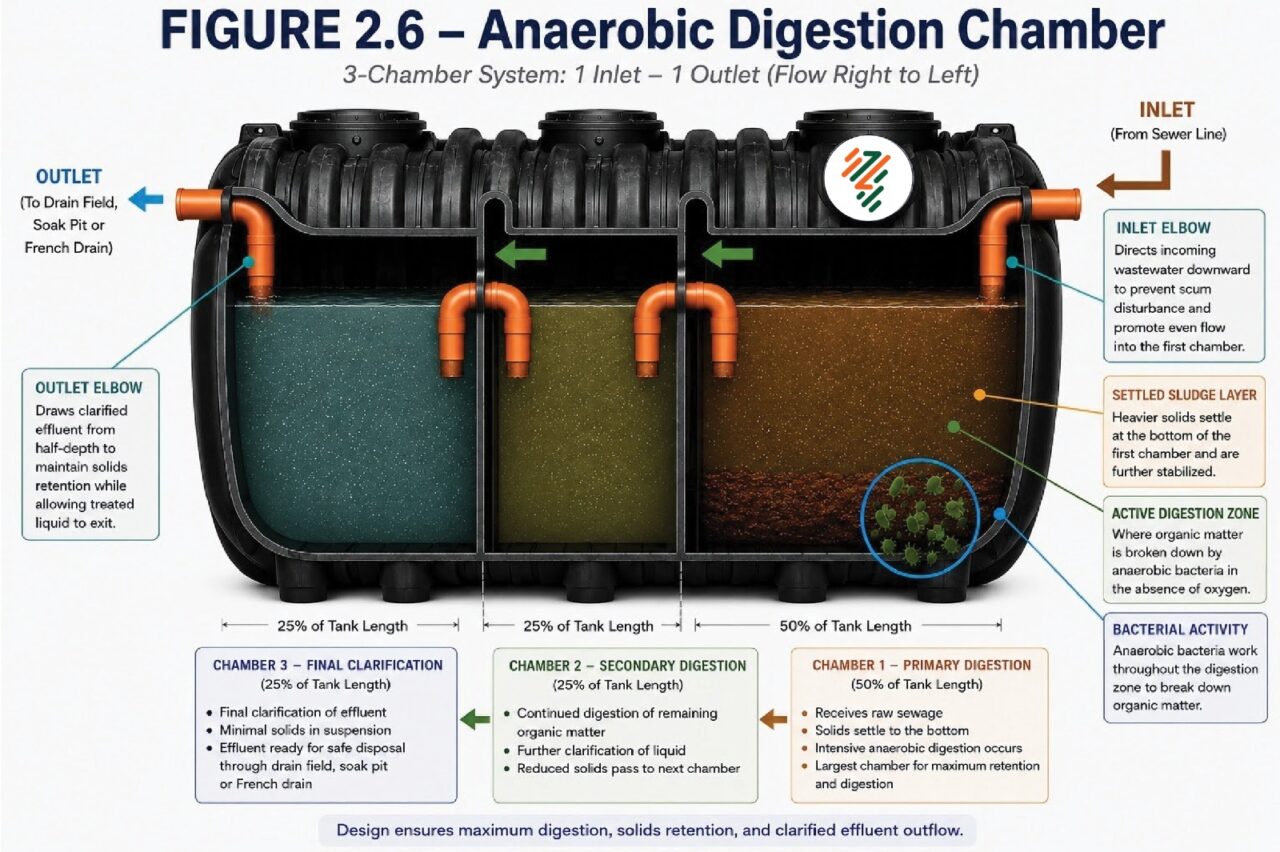
Understanding how a biodigester works helps you appreciate why it needs so little maintenance. Modern plastic biodigesters from Bio Tank Africa use a three-chamber system.
Here’s what happens inside:
Chamber 1: Primary Digestion
Waste from your toilets enters the first chamber. Here, anaerobic bacteria, bacteria that thrive without oxygen, begin breaking down the solid organic matter.
While these bacteria are naturally present in human waste, adding bioenzymes during installation and as regular maintenance helps accelerate the process significantly. The heavy solids begin to liquefy and settle. Gases produced during this process (mostly methane and carbon dioxide) are vented safely through a pipe above the ground.
Chamber 2: Secondary Treatment
The partially treated effluent flows from the first chamber into the second, where further bacterial digestion takes place. By this stage, most of the solid organic matter has been broken down. What remains is a liquid that is much cleaner and safer than raw sewage.
Chamber 3: Final Polishing
The third chamber receives the clarified liquid from chamber two. Here, any remaining solids settle and the liquid undergoes final treatment. What eventually exits the system is a relatively clean, odourless effluent that can safely drain into a soak pit.
The Role of Bioenzymes In Biodigester Systems
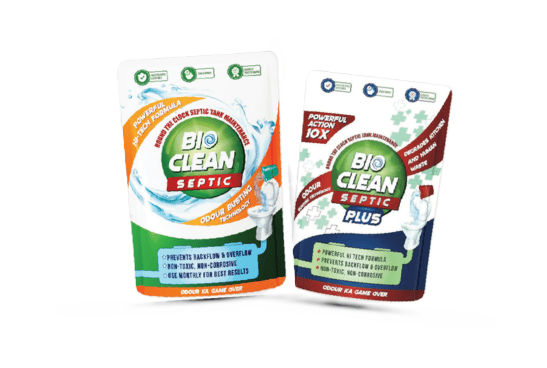
Bioenzymes like BioClean Septic are concentrated cultures of beneficial bacteria. Adding them to your biodigester when you first install it seeds the system with the right microorganisms to get the digestion process going quickly. A small maintenance dose every few months keeps the bacterial colony healthy and active.
For larger households or commercial properties, BioClean Septic Plus is also available. No bioenzymes means the system still works, but slower and less efficiently. With them, you get faster breakdown, zero odour, and a longer system lifespan.
How Much Does A Biodigester Cost In Kenya?
This is the question most homeowners ask first, and understandably so. Let’s break it down honestly.
Cost of the Biodigester Unit
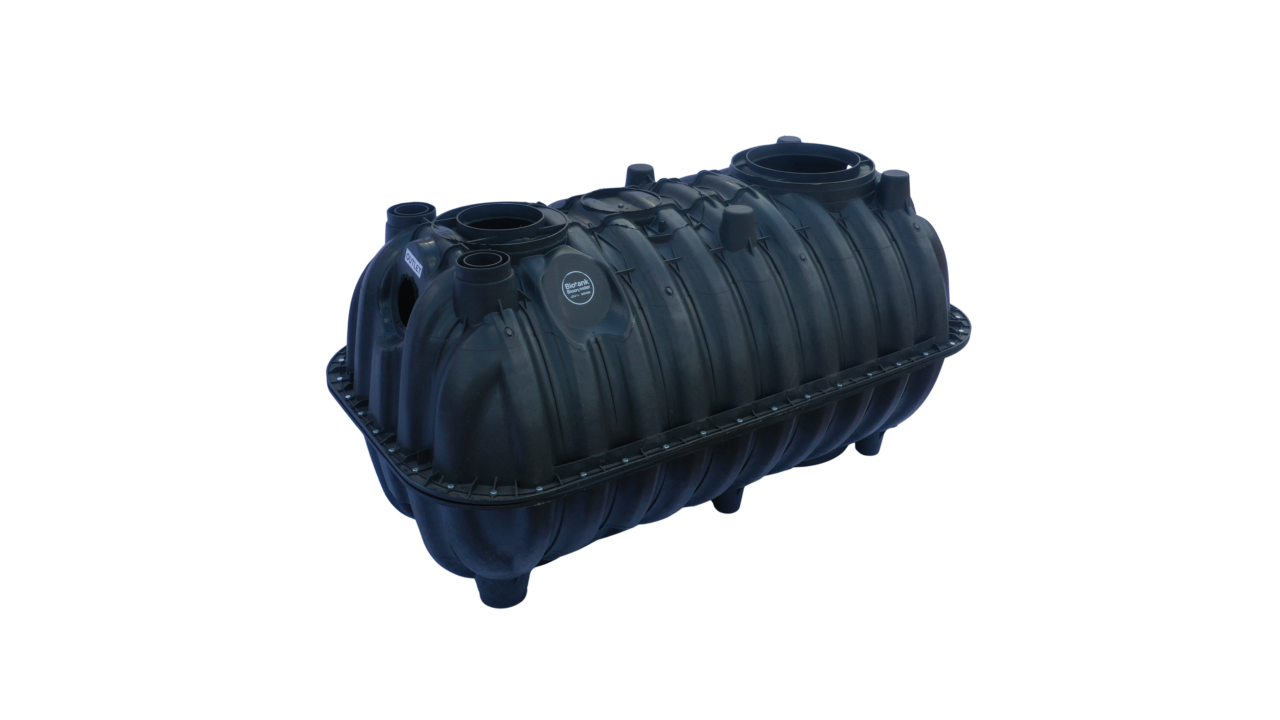
The cost of a biodigester in Kenya depends primarily on the size of the unit, which is measured in cubic metres and determined by how many people will be using it daily.
Here’s a general sizing guideline, along with the corresponding Bio Tank Africa products:
| Household Size | Recommended Tank Size | Suggested Product |
|---|---|---|
| 1–5 people | 1.0 – 1.4 cubic metres | Biotank Compact (KSh 44,500) |
| 6–10 people | 1.5 – 2.0 cubic metres | Biotank Standard (KSh 55,000) |
| 10–20 people | 2.5 – 3.0 cubic metres | Biotank Plus (KSh 78,000) |
| Commercial/Rental | 3.0+ cubic metres | Biotank Max (KSh 115,000) |
For a typical family home in Nairobi (4–6 people), the Biotank Standard is a popular option. It’s compact enough to fit in tight urban plots and powerful enough to handle daily household waste without any issues.
You can browse the full range on the Bio Tank Africa online shop or contact the team directly at +254 709 006300.
Installation Costs
One of the things that makes plastic biodigesters genuinely affordable is that you don’t need to hire a specialist for installation. Any qualified plumber can do the job. This is a significant saving compared to a concrete biodigester, which requires a skilled mason and several days of construction work.
Installation costs in Nairobi typically depend on:
- Depth of excavation: Rocky terrain (common in parts of Nairobi like Karen, Ngong, and Ruaka) requires more labour
- Distance from the house: Longer pipe runs cost more
- Labour rates in your area: Nairobi rates differ from peri-urban areas like Thika or Kitengela
A good plumber should be able to complete a standard residential installation in one day. You can also visit the Fundi Forum on the Bio Tank Africa website, which is designed to connect homeowners with experienced installation plumbers.
Ongoing Costs: The Real Long-Term Savings
Here’s where the biodigester truly shines over the septic tank:
A conventional septic tank in a busy household may need exhaustion every one to three months. At current Nairobi rates, a single exhaustion can cost anywhere from KSh 5,000 to KSh 15,000, depending on tank size and location. Over five years, this cost adds up to a substantial sum that a biodigester owner simply never spends.
The only ongoing cost for a biodigester is BioClean bioenzyme top-ups, which are inexpensive and infrequent. That’s a dramatically different maintenance bill over the lifetime of the system.
Biodigester Vs Septic Tank: Which One Should You Choose?
Installation
| Factor | Plastic Biodigester | Concrete Septic Tank |
|---|---|---|
| Installation time | 1 day | 3–7 days |
| Who can install | Any qualified plumber | Skilled mason required |
| Works on rocky terrain | Yes, compact design | Difficult, costly excavation |
| Urban plot compatibility | High | Moderate |
Operation
| Factor | Plastic Biodigester | Concrete Septic Tank |
|---|---|---|
| Electricity needed | No | No |
| Odour | None | Often present |
| Exhaustion needed | Rarely to never | Every 1–3 months |
| Sludge accumulation | Minimal | High |
Cost Over Time
| Factor | Plastic Biodigester | Concrete Septic Tank |
|---|---|---|
| Initial cost | Moderate | Low to moderate |
| Maintenance cost | Very low | High (regular exhaustion) |
| 5-year total cost | Lower | Higher |
| Environmental impact | Eco-friendly | Risk of groundwater contamination |
The verdict? For a new build or renovation in Nairobi and its surroundings, a plastic biodigester is the more economical and environmentally responsible choice in virtually every scenario.
The only situation where a septic tank might still make sense is in a remote area with very infrequent use: say, a seasonal property or a rural holiday home where the economics of long-distance product delivery may not be practical.
What About NCA And Local Authority Requirements?
The National Construction Authority (NCA) and county governments in Kenya are increasingly favouring biodigesters over conventional pit latrines and septic tanks, especially in planned estates and urban developments.
If you’re building in a registered estate or applying for a building approval, it’s worth checking with your county government. In many cases, a biodigester is not just a favourable choice: it may be the required one.
Is A Biodigester Right for Your Property?
Before purchasing a biodigester, here are a few questions worth thinking through:
How many people use the property daily? This determines the size you need. Don’t undersize a unit for a busy rental or commercial property: visit the Biodigester Systems page for a full overview of available sizes.
What is the soil type on your plot? Sandy or loam soils drain efficiently. If your land has heavy clay soil, you may need a slightly larger soakpit to handle the effluent output.
Is your plot on rocky terrain? This affects excavation depth and labour cost, but doesn’t prevent installation. Plastic biodigesters are compact enough to work even on shallow rocky plots.
Are you on a tight urban plot? The beauty of a three-chamber plastic biodigester is its small footprint. You don’t need a large plot for it to work.
Do you have existing sewage infrastructure? If you’re renovating a property that already has a septic tank, you can often connect to or replace it with a biodigester. A qualified plumber can assess what’s needed.
How To Install A Biodigester In Kenya: Step by Step Guide
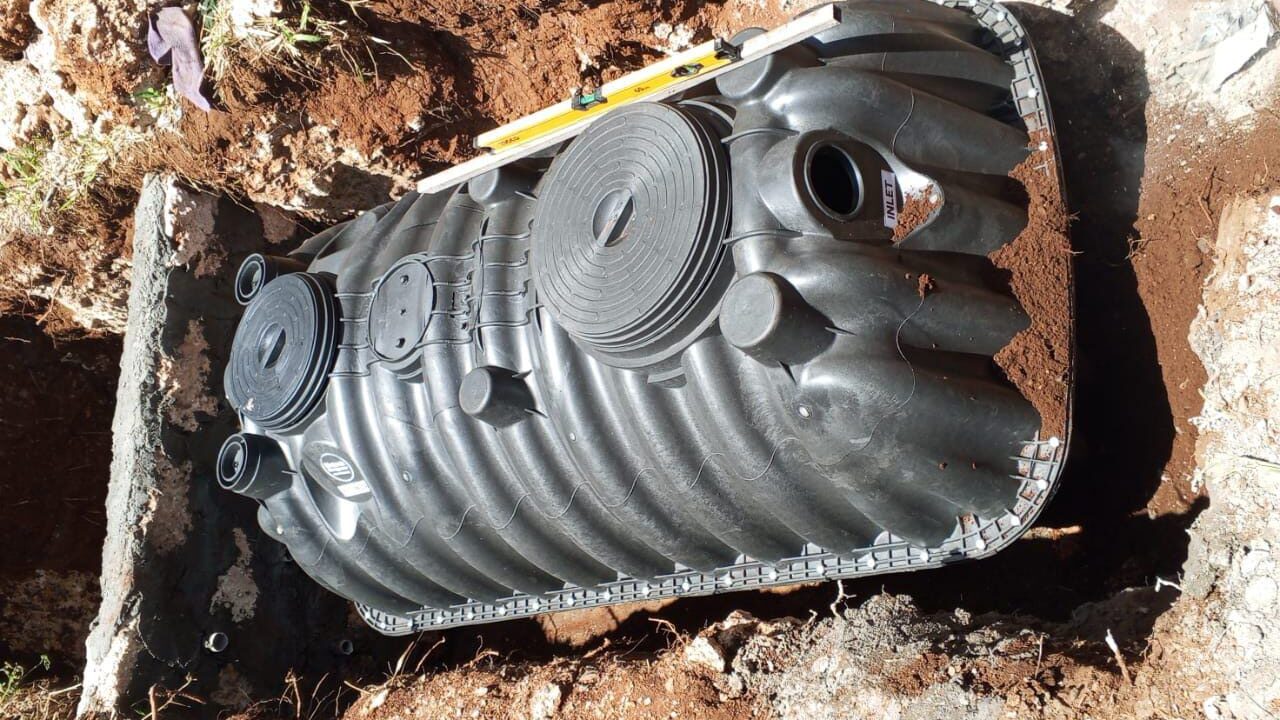
Knowing how to install a biodigester helps you plan your timeline and brief your contractor properly.
Step 1: Site Assessment
Before anything is purchased, assess where the tank will be placed. It should be accessible (not directly under a building), have a clear pipe route from your toilets, and be positioned where effluent can drain safely into a soak pit.
Step 2: Excavation
Your plumber or casual labourer excavates a hole to the required depth and dimensions for your chosen tank size. For a standard Biotank Compact or Biotank Standard unit, this is a relatively small excavation that most teams complete in a few hours on normal soil.
Step 3: Tank Placement
The plastic biodigester unit is lowered into the excavation. Because it’s a factory-made unit, there’s no on-site construction involved: you’re placing a ready-made system into the ground.
Step 4: Pipe Connection
Your plumber connects the inlet pipe (from your toilets and bathrooms) to the tank’s entry point, and the outlet pipe from the tank to your soak pit. A proper gradient on the inlet pipe is important to ensure waste flows smoothly by gravity.
Step 5: Backfilling
Once connections are confirmed and tested, the hole is carefully backfilled around the tank. The plastic unit is designed to withstand the pressure of the surrounding soil.
Step 6: Bioenzyme Seeding
This is a step many installers skip, but shouldn’t. Adding BioClean Septic at commissioning seeds the tank with the bacteria it needs to start digesting waste efficiently from day one.
Step 7: Testing
Run water through the system and confirm flow from inlet to outlet is smooth. Check all connections for leaks. Your plumber should confirm the system is functioning before leaving the site.
From excavation to testing, a standard residential installation typically takes one full day.
Maintaining Your Biodigester: What You Actually Need to Do

One of the most appealing things about a plastic biodigester is what you don’t have to do: no monthly exhaustion costs, no professional cleaning, no electricity to manage.
Here’s what you need to do, and how often:
Monthly: Check that your soak pit is draining properly. If you notice pooling water near the soak pit area, it may need expanding or clearing.
Every 3 to 6 Months: Add a maintenance dose of BioClean Septic or BioClean Septic Plus through your toilet. This tops up the bacterial colony and keeps digestion running at full efficiency.
What to Avoid
A biodigester is a living system, which means anything that kills the bacteria inside will damage its performance. Avoid flushing:
- Bleach and strong chemical cleaners in large quantities. Small amounts from normal toilet cleaning are fine, but pouring undiluted bleach directly into the toilet regularly will harm the bacterial colony. Consider switching to Tazo Toilet Cleaner, an eco-friendly cleaner that is safe for biodigester systems.
- Non-biodegradable materials such as wipes, sanitary pads, nappies, and plastic: these should never go into any sewage system.
- Cooking oils and grease in large amounts. These should go into a grease trap before reaching the biodigester. Bio Tank Africa stocks grease traps in three sizes: the 400 Pro, 560 Pro, and 760 Pro.
Follow these simple guidelines and your biodigester will serve your household efficiently for decades.
Who Supplies And Installs Biodigesters in Kenya?
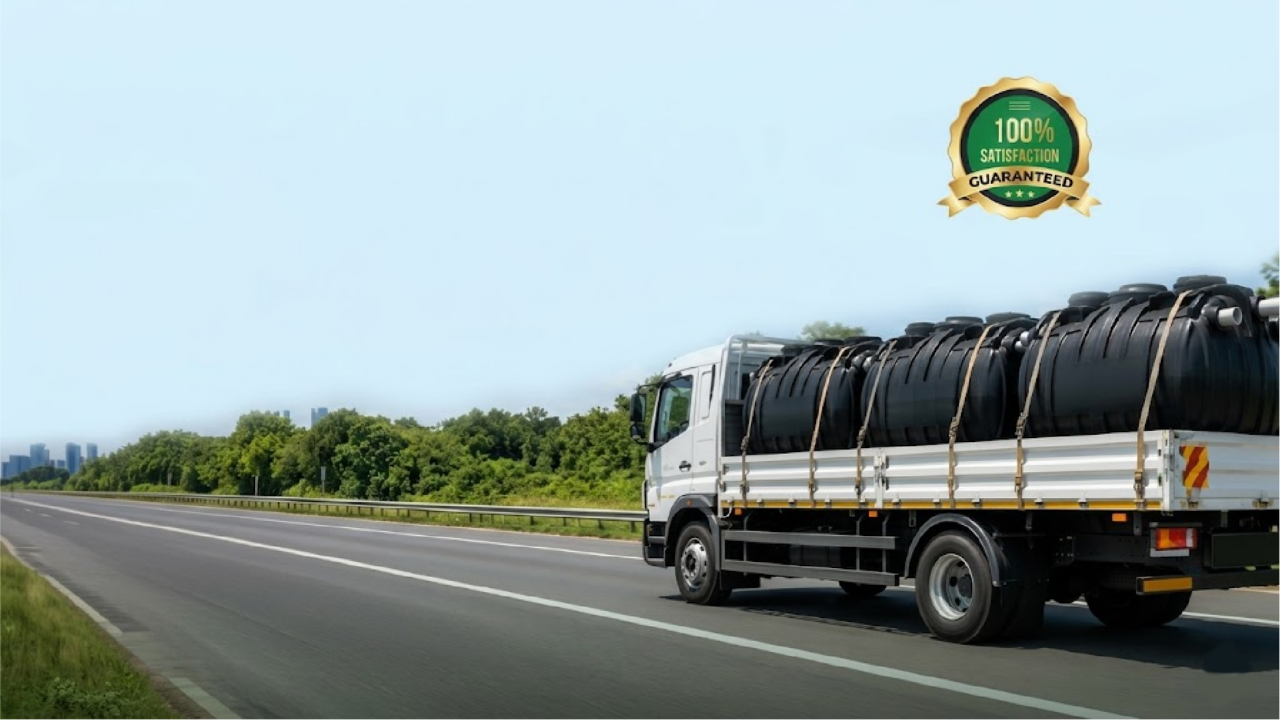
If you’re in Nairobi or anywhere in Kenya, Bio Tank Africa is one of the most established suppliers of plastic biodigester systems in the country. They are a manufacturer and distributor, not just a reseller, which means consistent product quality and reliable stock availability.
Why choose Bio Tank Africa?
- Ready-made plastic units available in multiple sizes for residential and commercial use
- Stocked at four convenient locations: Thika, Ruiru, Kitengela, and Nakuru
- No specialised installation technician required, any qualified plumber handles it
- BioClean bioenzymes available for commissioning and maintenance
- Over 3,000 systems installed across Kenya and East Africa
- 100+ verified Google reviews from real customers
Their team can advise you on the right tank size for your household, explain the installation process, and guide your plumber if needed.
Get in touch:
📞 +254 709 006300 📧 info@biotankbiodigester.com 📍 Thika: 168 Park Avenue, Garissa Road 📍 Ruiru: Shell Northlands Petrol Station 📍 Kitengela: Danka Plaza, Ground Floor 📍 Nakuru: Shayona Business Centre
You can also browse and order directly from the Bio Tank Africa online shop.
Frequently Asked Questions About Biodigesters in Kenya
1. How long does a plastic biodigester last?
A good-quality plastic biodigester, properly installed and maintained, should last 30 to 50 years or more. The high-density polyethylene (HDPE) plastic used in modern units is resistant to soil pressure, moisture, and the chemical environment inside the tank, enhancing the unit’s longevity.
2. Does a biodigester smell?
No. This is one of the biggest reasons homeowners prefer it over a conventional septic tank. As long as the system is correctly installed (with a proper vent pipe) and bioenzymes are maintained, there should be no odour at all. Smell is usually a sign of an installation error or a depleted bacterial colony that needs a bioenzyme top-up.
3. Can I install a biodigester if my plot is on rocky ground?
Yes. This is one of the advantages of a compact plastic biodigester over a concrete option. Plastic units require less excavation depth and can be accommodated even on rocky plots in areas like Karen, Ngong, Lavington, and parts of Kiambu. Your plumber will assess the best positioning.
4. Do I still need a soakpit with a biodigester?
Yes. The biodigester treats the waste, but the final clarified effluent still needs somewhere to drain. A soakpit (also called a drain field or leach pit) is a simple underground pit filled with gravel that allows the treated water to slowly percolate into the surrounding soil. Your plumber will size and position this alongside the tank.
5. Is a biodigester approved by county authorities in Kenya?
Generally, yes. Most county governments and the National Construction Authority (NCA) recognise biodigesters as a compliant sewage treatment solution. In many planned estates and new developments, a biodigester is the preferred or mandated option. Always check with your specific county’s environmental and building department for confirmation, especially for commercial developments.
6. Can a biodigester handle waste from a rental property?
Absolutely. In fact, rental properties, bedsitters, one-bedroom units, studio apartments, are one of the most common use cases for biodigesters in Kenya. The key is sizing the unit correctly. A property with 10 rental units housing two to three people each needs a much larger system than a single-family home. The Biotank Max is designed for high-capacity commercial and rental use. Contact Bio Tank Africa for commercial sizing advice.
7. What happens if the biodigester gets full?
A properly functioning biodigester rarely “gets full” in the way a septic tank does, because the waste is continuously broken down. If you notice the system backing up, it’s usually a sign that the bacterial colony needs attention (a BioClean dose usually solves this), there’s a blockage in the inlet or outlet pipe, or the unit was undersized for the number of users.
Final Word: Is A Biodigester Worth It In Kenya?
For any homeowner building or renovating in Nairobi today, the answer is straightforward: a plastic biodigester costs less to maintain over its lifetime, installs faster, performs better in Kenya’s varied terrain, produces no smell, and aligns with where county regulations are heading.
The old septic tank served its purpose. But Kenyan homeowners now have a better option, one that works with nature rather than against it, saves money in the long run, and requires almost no attention once it’s in the ground.
If you’re ready to take the next step, Bio Tank Africa has stock available now across four locations in Kenya. Their team is on hand to help you choose the right size and get your plumber installation-ready.
📞 Call or WhatsApp: +254 709 006300
🌐 Order online: biotankbiodigester.com/shop
📧 Email: info@biotankbiodigester.com