You have just bought a plot in Ruai or finished the slab on your new house in Ruiru, and the plumber is asking a question you were not quite prepared for: Do you want a biodigester or a septic tank?
For most Kenyan homeowners, both words refer to the same general idea: a hole in the ground that handles waste. But in reality, a biodigester and a septic tank are two completely different systems with different costs, different maintenance demands, and very different long-term outcomes.
Understanding the difference between a biodigester and a septic tank is crucial, as your choice will affect your household for the next 20 to 30 years. This guide breaks it down clearly so you can decide which option is best for you.
Biodigester vs Septic Tank in Kenya: Quick Comparison
If you are deciding between a biodigester and a septic tank, this quick comparison gives you a clear overview of how both systems differ in cost, maintenance, performance, and suitability for Kenyan homes:
| Feature | Biodigester | Septic Tank |
| How it works | Uses natural anaerobic bacteria to break down and treat waste inside the system, significantly reducing sludge buildup before liquid flows into a soak pit. | Primarily stores waste, allowing solids to settle while partially treated liquid drains into a soak pit, requiring regular desludging over time. |
| Upfront cost in Kenya | Lower to medium, depending on size | Medium to high, depending on construction and excavation |
| Maintenance needs | Very low when properly installed and used correctly | Requires periodic desludging, usually every 1 to 3 years |
| Odour control | Typically low odour when well installed and maintained | Can develop a smell when full or poorly maintained |
| Space required | Compact design, suitable for smaller plots | Requires more space for the tank and soak pit system |
| Installation time | Faster, especially with ready-made units | Longer due to digging, curing, and construction work |
| Soil suitability | Performs well in most soil types, including clay and black cotton soil | Works best in well-draining soils |
| Long-term costs | Generally, lower maintenance costs over time | Higher long-term costs due to desludging and repairs |
| Environmental impact | Produces cleaner effluent with lower contamination risk | Higher risk of groundwater contamination if poorly designed |
| Best suited for | Homes, small businesses, and space-limited properties | Apartments, hospitals, hotels, and large commercial properties |
What Is A Septic Tank and How Does It Work?
A septic tank is an underground container, typically made from concrete, fibreglass, or plastic, that collects all household wastewater and sewage. Solids settle at the bottom and form sludge, while liquids flow out through a soakage pit or drainage field into the surrounding soil.
The system is passive; it relies on basic physics and gravity to move waste through chambers. And it depends on the surrounding soil to absorb and filter the liquid effluent.
Where soil permeability is “poor”. Or the water table is high, as is common in areas like Githurai, parts of Kasarani, and low-lying sections of Kitengela, septic tanks can cause serious problems, including groundwater contamination and surface pooling.
Septic tanks require regular desludging, typically every “one to three” years, depending on the household size and usage. Neglecting this leads to blockages, backflows, and costly repairs.
What Is A Biodigester and How Does It Work?
A biodigester uses a biological process to treat waste rather than simply store it. Inside the system, naturally occurring anaerobic bacteria break down organic waste into water, biogas, and a nutrient-rich liquid effluent.
Unlike a conventional septic tank, a properly functioning biodigester continuously processes waste so that very little solid matter accumulates over time.
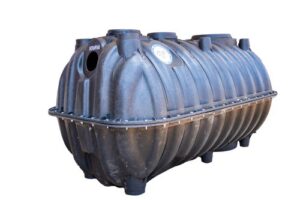
The ready-made biodigester systems offered by Bio Tank Africa are three-chamber plastic units that can be installed by a plumber without heavy excavation equipment.
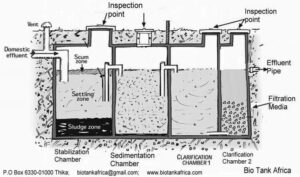
Waste enters the first chamber, where anaerobic digestion begins. It then moves through the second and third chambers, where further treatment occurs before the resulting liquid effluent is safely discharged into a soakage pit.
Does A biodigester ever need emptying?
This is one of the most common questions homeowners ask us. A well-sized and properly installed biodigester should not require desludging under normal operating conditions.
The bacterial activity within the system continuously breaks down solid waste.
In households that follow basic operational guidelines, such as avoiding bleach and harsh disinfectants that kill bacteria, the system can run for many years without emptying.
The use of Bio Clean Enzymes can also help accelerate natural waste breakdown, reduce sludge build-up, eliminate odours, and prevent blockages within the system.
The BioTank biodigesters, in particular, have a lifespan of 50+ years. And a warranty of 4 years.
Using Grease Trap Pro systems helps trap fats, oils, and grease before they enter the biodigester, while Tazo Natural Home Cleaners provide a safer, plant-based cleaning alternative that is gentler on the beneficial bacteria inside the system for long-term performance.
Biodigester vs Septic Tank Pros and Cons: A Practical Comparison
Now that you understand what a biodigester and a septic tank is, let’s compare the two more closely, looking at the good and bad sides of each of them
Installation
Septic tanks made from concrete are heavy and require machinery to install. On rocky terrain, the excavation costs alone can be high.
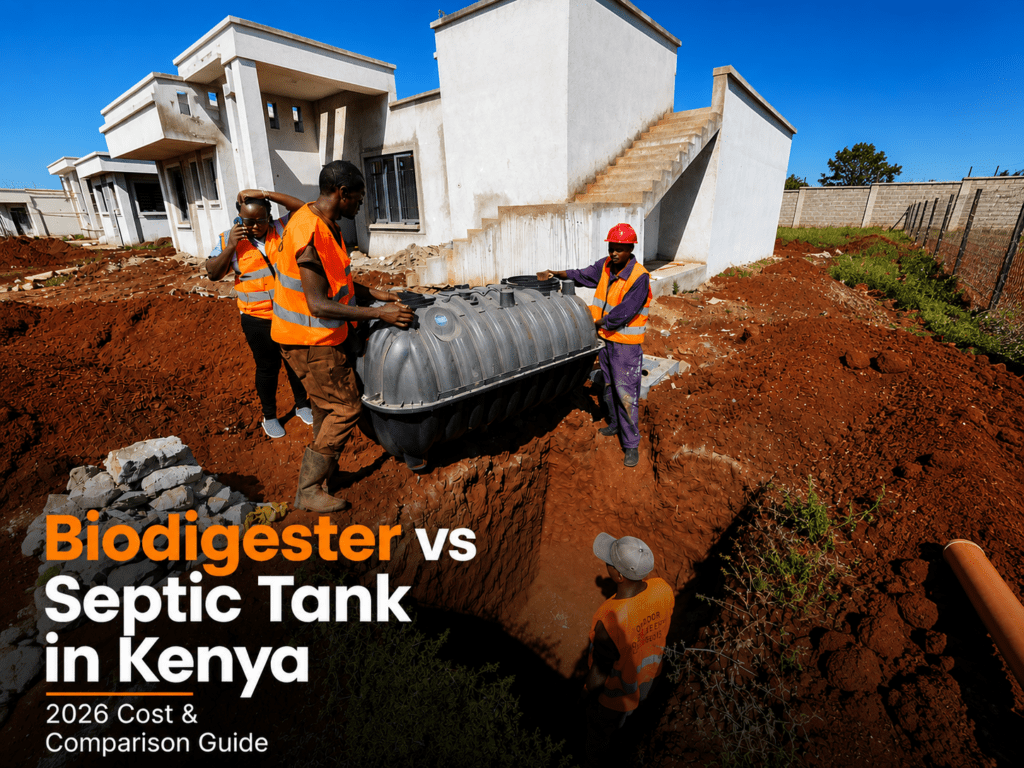
Plastic biodigester units are lighter and can be installed manually in tighter spaces, which reduces both time and labour costs.
Odour
A functioning septic tank that is regularly maintained should not produce odours, but in practice, many do.
When a septic tank becomes full or the soakage pit is overwhelmed, the smell can become a serious neighbourhood issue.
A correctly installed biodigester operates anaerobically in a sealed environment, which makes it 100% odor-free under normal conditions.
Maintenance
Septic tanks need periodic desludging, typically carried out by an exhauster truck. In estates with narrow access roads or where the tank is sited far from the road, this can be expensive and logistically difficult.
Biodigesters, once established, require far less intervention. The main maintenance requirement is protecting the bacterial ecosystem inside the tank by being mindful of the cleaning products used in the home.
The use of Bio Clean Enzymes and Tazo Natural Home Cleaners can also help support healthy bacterial activity and long-term system performance.
Environmental Impact
This is where the two systems diverge most clearly:
A septic tank discharges partially treated effluent into the soil. If the soakage pit is overwhelmed or the surrounding soil is saturated, this effluent can reach the water table. In areas with high borehole density, like parts of Ruiru and Juja, this poses a real public health risk.
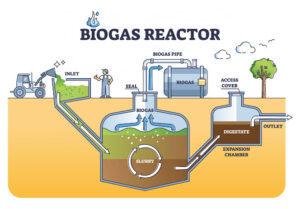
A biodigester produces a much cleaner liquid effluent due to the bacterial treatment process. This is significantly better for groundwater protection. Some larger biodigester systems can even capture methane for cooking gas, though the domestic-scale units used for household sanitation are primarily focused on wastewater treatment.
NCA and County Compliance
Kenya’s National Construction Authority (NCA), through enforcement of the National Building Code 2024, alongside county governments exercising devolved sanitation mandates, has strengthened regulatory oversight of sanitation systems in recent years.
Biodigesters are generally viewed more favourably from an environmental compliance standpoint, especially in areas where county bylaws restrict septic tank use near water bodies or in high-density neighbourhoods.
Biodigester vs Septic Tank Price In Kenya Breakdown:
Cost is often the deciding factor for homeowners, so it deserves an honest discussion.
A conventional concrete septic tank in Kenya typically costs between KSh 120,000 and KSh 300,000 for a standard residential home, including basic construction and installation. Larger compounds, apartments, or difficult sites can push costs to KSh 400,000+.
The cost varies depending on size, soil conditions, and the contractor. This figure can increase significantly if rock is encountered during excavation, if the soakage pit requires extensive construction, or if the site is far from a reliable access road.
A ready-made plastic biodigester system from Bio Tank Africa, properly sized for your household, is competitively priced at Ksh 38,500 to as Ksh 100,000 (still on the low side compared to septic tanks), depending on the capacity and site requirements.
The key difference is what you get for your money. With a biodigester, the installation is cleaner, the long-term maintenance costs are lower, and you are not paying for bowser trips every few years.
Here’s a quick breakdown of biodigester prices from Bio Tank Africa:
| Biodigester Model | Estimated Users | Price (KES) | Best For |
| Biotank Compact | 1 to 10 users | KSh 38,500 | Bedsitters, small homes |
| Biotank Standard | Up to 15 users | KSh 52,000 | Family homes |
| Biotank Plus | 15 to 25 users | KSh 71,000 | Shared compounds |
| Biotank Max | 25 to 35+ users | KSh 100,000 | Boutique hotels, small institutions, and controlled shared-use properties |
For a detailed quote based on your specific location and household size, contact Bio Tank Africa directly at +254 709 006300 or visit biotankbiodigester.com.
See more information about our biodigesters here to understand which capacity suits your home.
Key Insight:
In many Kenyan towns, homeowners are shifting toward biodigesters because a KSh 38,500 to KSh 100,000 ready-made system can cost less than building a full concrete septic tank, while taking less space and needing less maintenance.
Biodigester vs Septic Tank: Which Is Right for Your Situation?
There is no single answer that fits every household, but there are clear indicators that point one way or the other.
If you are building in a location with poor soil permeability, a high water table, or in a densely populated area where groundwater protection matters, a biodigester is the more responsible and more practical choice.
If you are in a rural area with excellent soil drainage, a large plot, and a modest budget, a well-designed septic tank can still serve adequately. However, even in those situations, the long-term cost calculus often favours a biodigester when you account for desludging costs over 10 to 20 years.
Read our guide on Biodigester Systems in Kenya for more insights on cost, installation, maintenance, etc.
Choosing a Biodigester System in Kenya: What to Look For
Not all biodigesters on the market are equal. There are locally fabricated units of varying quality and imported systems that may not account for Kenyan soil conditions, rainfall patterns, or usage habits.
Bio Tank Africa supplies ready-made three-chamber plastic biodigester systems that have been designed and tested for domestic use in Kenya. The plastic construction means the units are corrosion-resistant, lightweight for transport, and structurally stable once backfilled correctly. They require no electricity to operate and produce no offensive odour when properly installed.
Installation should always be carried out by a plumber who understands biodigester-specific requirements, including the correct depth, inlet and outlet configuration, and proper backfilling technique. Bio Tank Africa provides guidance through the installation process and serves clients across Kenya.
Biodigester Vs Septic Tank Frequently Asked Questions:
If you’re building a home in Kenya, these frequently asked questions will help you further understand the key differences between a biodigester and a septic tank before making your decision.
How does a biodigester septic tank work differently from a regular septic tank?
A regular septic tank stores waste and relies on the soil to filter liquid effluent. A biodigester uses anaerobic bacteria to actively break down organic waste inside the tank. This means solids are continuously digested rather than accumulated, the resulting liquid effluent is cleaner, and the system generally requires far less maintenance over time.
Can a biodigester be installed in any soil type in Kenya?
Yes. Because the treatment process happens inside the tank rather than in the surrounding soil, biodigesters perform well in black cotton soil, clay-heavy ground, and areas with high water tables where conventional septic tanks struggle. The soakage pit still needs to be appropriately designed, but the core system is far less soil-dependent.
How long does a biodigester last?
A quality plastic biodigester, properly installed and maintained, can last 25 years or more. The main factors that affect longevity are the quality of the tank material, the installation standard, and whether the household avoids introducing substances that kill the anaerobic bacteria inside, such as strong bleach or antibacterial cleaning agents. The use of BioClean Enzymes and Tazo Natural Home Cleaners can also help support healthy bacterial activity and long-term system performance.
Is a biodigester legal and approved for use in Kenya?
Yes. Biodigester systems are recognised and permitted under Kenyan environmental and building regulations. In many counties, they are actively preferred over conventional septic tanks, particularly in high-density areas and near water sources. Always ensure your system is installed to the correct specifications and that you obtain the relevant approvals from your county government.
What size biodigester do I need for my household?
Sizing depends primarily on the number of people in the household and daily water usage. A standard family home of four to six people typically requires a 2,000 to 3,000-litre capacity unit. Rental properties, institutions, and commercial premises require larger configurations. Bio Tank Africa can advise you on the right size during a consultation.
Making the Right Choice for Your Home
The biodigester vs septic tank question comes down to what you are optimising for. If it is the short-term installation cost alone, the answers may be closer than you expect. If it is long-term value, environmental responsibility, low maintenance, and peace of mind, the biodigester consistently comes out ahead, particularly in Kenyan urban and peri-urban contexts.
Both systems have their place, but the direction of new construction in Kenya is clearly moving toward biodigester technology. County governments are tightening regulations, awareness of groundwater contamination is growing, and homeowners are increasingly asking for solutions that do not require a bowser truck pulling up every other year.
| Ready To Install A Biodigester in Kenya? Bio Tank Africa supplies and supports the installation of ready-made biodigester systems across Kenya. We deliver Countrywide. Call or WhatsApp: +254 709 006300 Visit: biotankbiodigester.com/shop |